What kind of hack is Pokémon Lazarus?
Lazarus is a full-length Emerald ROM hack with its own region, its own characters, and its own sense of identity. The big draw is how well it balances classic GBA adventure feel with modern convenience. You still get that familiar route-to-town-to-gym rhythm, but nearly every piece of the experience has a little more flavour, more utility, or more reason to explore than you would expect.
The Ilios region is bright, coastal, and full of little detours. Towns feel distinct. Routes are built for curiosity. Ruins, side areas, optional NPC goals, and route-specific systems stop the journey from becoming a straight line. It has enough modern hooks to feel fresh, but it never loses the charm of a proper handheld-era adventure.
Why people got so hyped for it
A lot of ROM hacks are built around one angle: harder battles, bigger dex, darker story, or flashy gimmicks. Lazarus got attention because it looks like a complete package. It has a strong visual identity, a fresh region, a big modern Pokédex, and loads of systems that make the world feel busy in a good way.
It also benefits from good first impressions. The GBC-inspired look gives it a nostalgic twist instantly, but underneath that old-school coat of paint is a much more modern-feeling game. That contrast sticks with people. It feels familiar and new at the same time, which is exactly the sort of thing that gets players talking.
It has a real identity
This is not just another difficulty rebalance or another Kanto remix. Ilios has its own flavour, own cast, and own vibe.
It keeps rewarding curiosity
Routes, quests, side mechanics, and optional content make wandering off the main path feel worthwhile constantly.
It looks memorable
The retro visual style gives it instant personality without making the game feel dated or clunky to play.
Ilios is built for exploring, not speedrunning past
If you are the kind of player who checks every side path, re-talks to NPCs after story beats, and likes a region with a bit of mystery to it, Lazarus is very much aimed at you. The region has a sun-soaked island feel, but it is not just postcard scenery. It is packed with ruins, routes that evolve depending on time of day, optional errands, and small systems that make revisiting places feel worthwhile.
The day and night encounter split is one of the biggest reasons the routes stay interesting. Wild pools change depending on in-game time, so a place you already explored once can still have something new for you later. Add in overworld encounters, and the whole map feels more alive than the average GBA-era hack.
- Overworld Pokémon make hunting and scouting less annoying and more intentional.
- Visible shinies and creeping up on targets give collectors a proper reason to engage with the encounter systems.
- Ruin-style puzzles and optional side spaces add that adventure-game feeling a lot of hacks miss.
- University Student side rewards nudge you to actually fill entries and pay attention to local wildlife instead of just bulldozing ahead.
Difficulty modes without making the game feel miserable
Lazarus gives you room to decide what kind of run you want. Normal Mode keeps things approachable and lets most sensible teams get through without endless rebuilding. Hard Mode tightens things up with stricter level caps, stronger opposing teams, and boss fights that ask more from your coverage, planning, and item use.
That balance matters. A lot of people like hacks that feel tougher than official games, but not every player wants every battle to turn into spreadsheet warfare. Lazarus lands in a nice middle area where challenge players can push the game, while more casual players can still enjoy the region, story, and systems without feeling locked out.
- Normal Mode: smoother journey, more flexible team building, better for first-time players.
- Hard Mode: stronger gym teams, extra coverage, harder level pressure, better if you enjoy planning and tighter battles.
- Nuzlocke-friendly systems: targeted hunting, better information, and lots of meaningful team choices help challenge runners without making things brainless.
The systems that make Lazarus feel modern
Plenty of hacks slap modern buzzwords on the feature list and call it a day. Lazarus actually uses its systems well. They feed into each other and make the adventure more enjoyable minute to minute.
Unlocked early enough to matter and great for targeted hunting, shiny checks, and route depth.
Treated like a meaningful mid-game unlock instead of a throwaway gimmick.
More interactive than standard fishing and tied to treasure plus rod-based pools.
A nice side activity that makes resource gathering feel less flat.
Cosmetic variety that helps your run feel more personal.
Closer to later-gen berry design, with mulch, mutations, and useful rewards for engaging with it.
Not just filler text boxes — they help make the region feel inhabited and worth revisiting.
Move help, naming help, and progression-based conveniences reduce the usual grind.
Small details that go a long way
The Move Relearner is integrated into the world nicely, Mega Stones expand through progression, and even the berry and fishing systems have a bit more thought put into them than you normally see. Those are the kinds of touches that make a long playthrough feel smoother instead of more bloated.
Starter choice actually changes the vibe of your run
Lazarus does not lock you into the same old starter feeling. Instead, you choose from three full starter trios, which already makes the opening feel more replayable than most hacks.
- Alola: Rowlet, Litten, Popplio
- Kalos: Chespin, Fennekin, Froakie
- Paldea: Sprigatito, Fuecoco, Quaxly
That wider spread is a bigger deal than it sounds. It immediately changes early-game team planning and helps each run feel a little more like your own rather than another standard fire-water-grass opener.
Who this hack is perfect for
Story-first players
You want a proper new journey, a new region, and something that feels like its own adventure rather than a ruleset challenge.
Collectors & hunters
Overworld encounters, day and night tables, DexNav hunting, and a big curated dex give you plenty to chase.
Challenge runners
Hard Mode, stronger boss design, better support tools, and lots of team variety make it a good fit for repeat runs too.
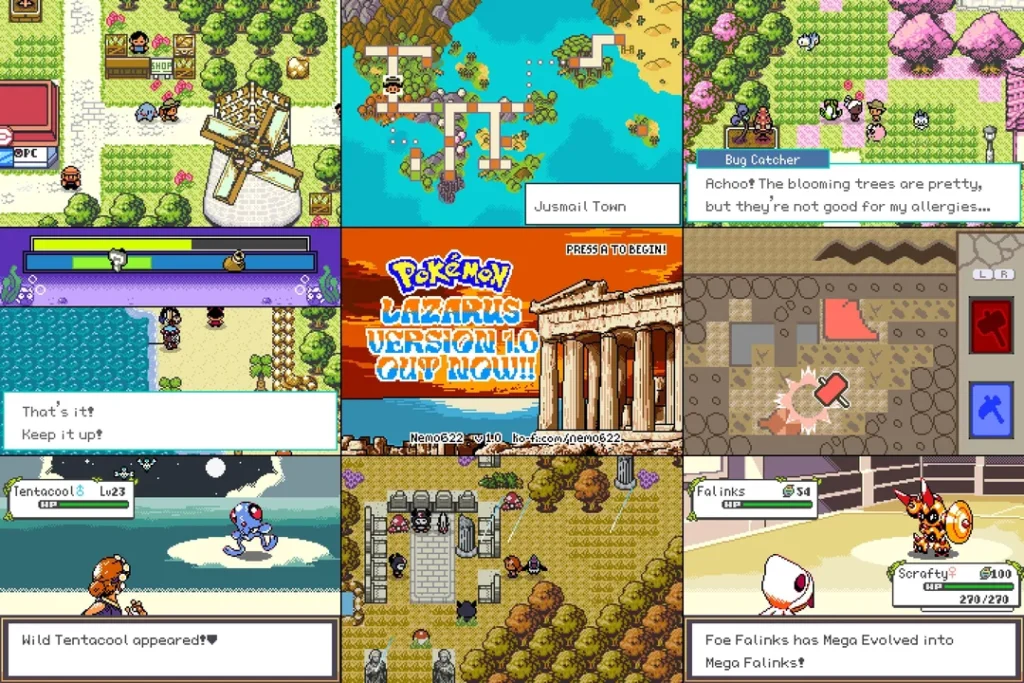
In-game screenshots
Even from screenshots alone, Lazarus stands out. The retro colour palette and cleaned-up presentation give it a vibe that feels warm and nostalgic without looking cheap or messy.
Good early habits for a better playthrough
- Check routes at different times. Day and night changes are one of the game’s best systems, so make use of them.
- Do not rush side content. Lazarus is much stronger when you engage with its optional bits instead of skipping them all.
- Keep your team balanced early. Harder boss fights punish one-note teams more than official games do.
- Revisit useful NPCs. Shops, move utility, and progression-based unlocks become more valuable as the run goes on.
- Use both save methods. In-game saves for proper long-term progress, save states for quick retries on browser.
Pokémon Lazarus FAQ
Is Pokémon Lazarus mainly a hard-mode hack?
No. It has a tougher mode for people who want it, but the bigger appeal is the complete region, polished presentation, and all the systems around exploration and team building.
Does it feel like a modern hack or an old-school one?
Both, honestly. The visuals lean retro, but the feature set is very modern. That mix is a huge part of the game’s appeal.
Is it good for people who are tired of pure difficulty hacks?
Yep. Lazarus gives you more to do than just prepare for the next brutal boss. The region, sidequests, and collectible systems carry a lot of the fun.
What makes it stand out from other Emerald-based hacks?
The Greek-inspired Ilios setting, the strong visual identity, the amount of side content, and the way the modern systems all work together instead of feeling bolted on.